Master any language step by step with our practical, easy-to-follow checklists and expert tips.
Learning a new language becomes a lot easier when you have a clear plan to follow. That’s where our free language learning checklist templates come in. Whether you’re just starting as a beginner, building fluency at an intermediate level, or polishing your skills as an advanced learner, these checklists will help you stay organized and motivated. Each template is fully editable in MS Word, making it simple to track progress, set daily goals, and create a personalized study plan that actually works.
What is the Language Learning Checklist?
This is just as good as having a tutor. It simplifies your goals to easily achieve objectives such as; acquiring new vocabulary, completing quizzes, or conversing with other people. With this template, you can be able to note what you have accomplished and what follows; thereby improving your studying process. It motivates one throughout the journey and also helps them know how far they’re from being fluent speakers.
Download Templates in MS Word Format
Ready to get started? Download our free Templates and take the first step towards mastering a new language!
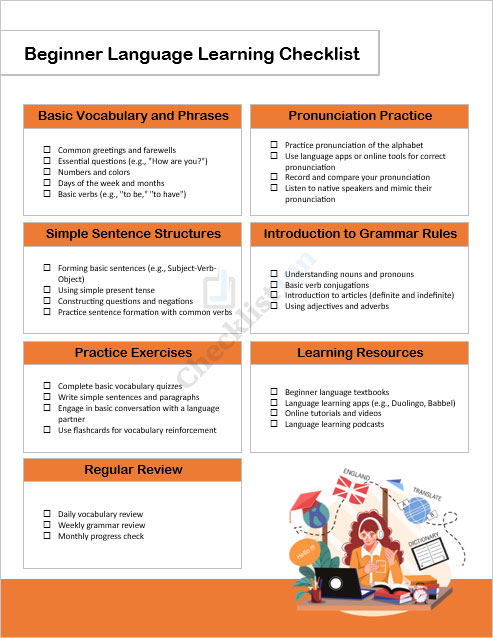
01. Beginner Language Learning Checklist

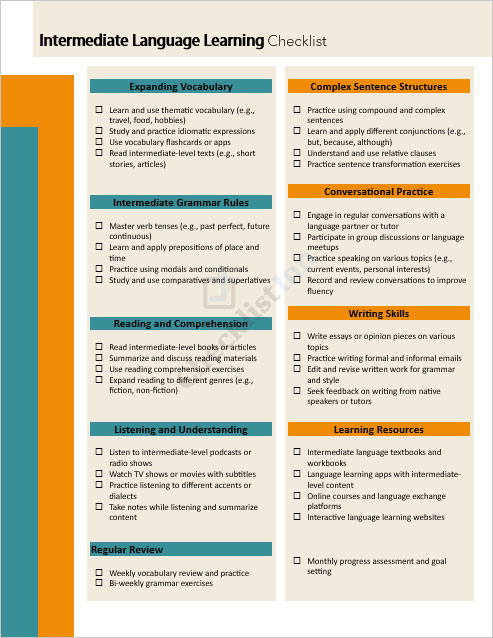
02. Intermediate Language Learning Checklist
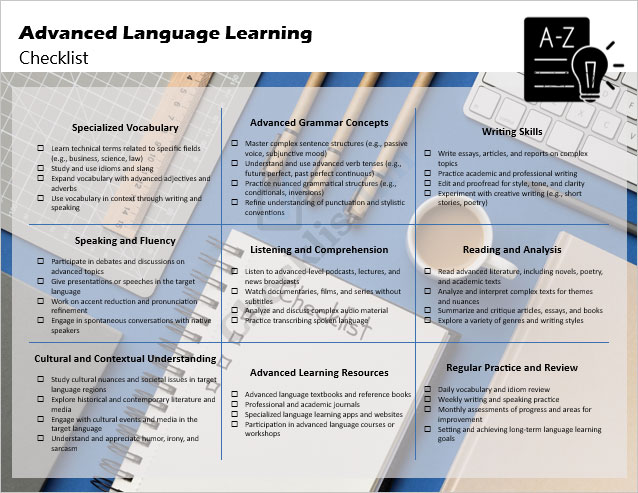
03. Advanced Language Learning Checklist
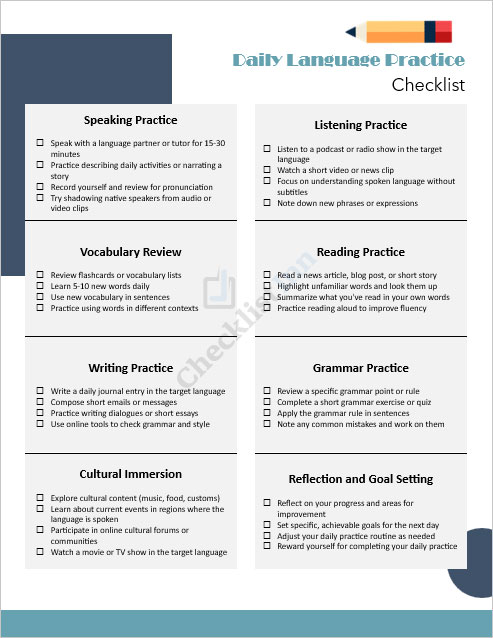
04. Daily Language Practice Checklist
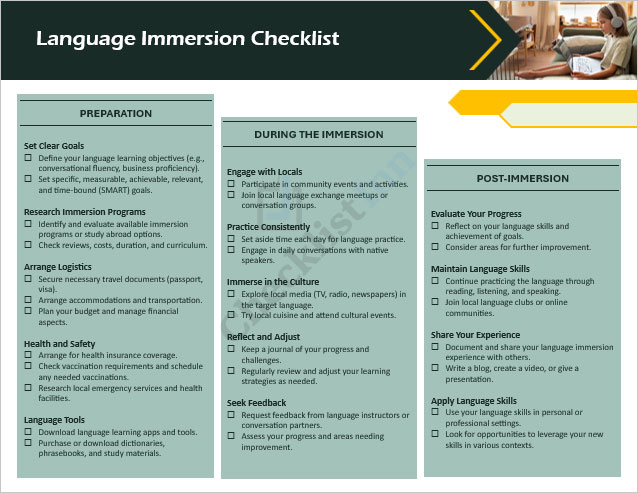
05. Language Immersion Checklist
The Mind of a Checklist: How It Boosts Language Learning
Checklists aren’t just convenient—they tap into psychology to make language learning more effective. Here’s how they help you stay on track:
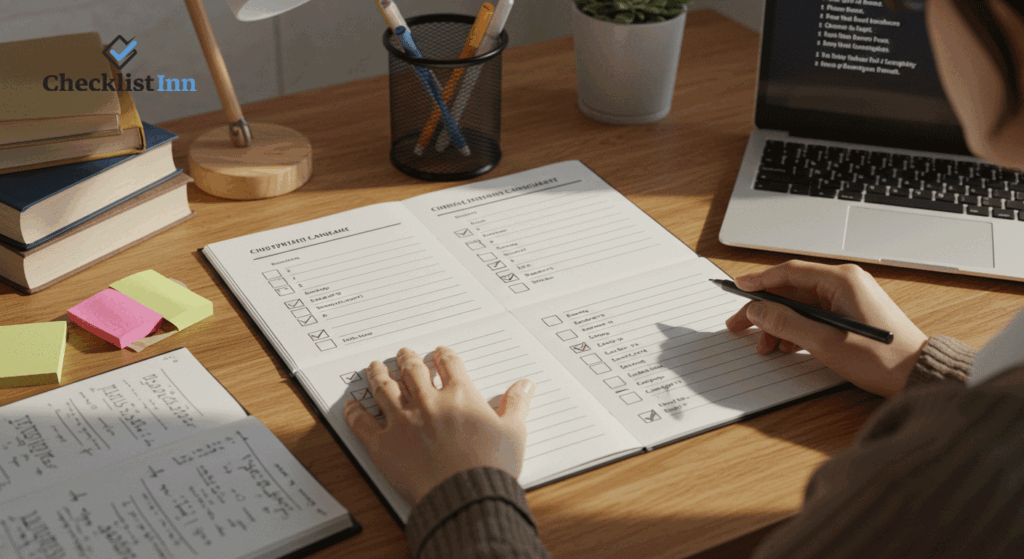
Manage Mental Overload – Instead of juggling everything in your head, checklists break big goals into smaller, manageable steps, making it easier to focus and progress.
Boost Motivation – Turning vague goals into clear tasks gives you a sense of achievement each time you tick something off, keeping you motivated with visible progress.
Encourage Action – With tasks laid out, it’s easier to start and build consistent habits, helping you avoid procrastination.
Stay Organized – A checklist keeps everything in one place, ensuring you don’t miss important areas of practice while saving time.
Stay Accountable – Acting as your personal progress tracker, a checklist keeps you focused, adaptable, and aware of how far you’ve come.
Enhance Your Learning with Expert Strategies and Resources
Take your language skills further with practical strategies and the right tools to make learning faster and more enjoyable.
Effective Language Learning Strategies
- Proven Techniques – Use methods like immersion and spaced repetition to accelerate progress.
- Personalized Plans – Create a study routine that fits your goals and learning style.
Resources and Tools for Success
- Top Apps and Websites – Discover the best digital tools to support your journey.
- Essential Books and Materials – Explore recommended resources to strengthen your foundation.
Motivation and Overcoming Challenges
- Stay Motivated – Beat plateaus with strategies that keep you moving forward.
- Avoid Mistakes – Recognize common errors and stay on track.
Advanced Learning Techniques
- Reach Fluency – Apply advanced conversation strategies to polish your skills.
- Learn Through Media – Use films, music, and books to practice naturally.
Benefits of Using Checklists for Language Learning
Learning a new language can feel overwhelming with so many skills to practice—vocabulary, grammar, speaking, listening, and cultural nuances. A checklist can make the process simpler and more effective.
- Stay Organized
Checklists break learning into clear, manageable steps, so you always know what to focus on next. - Build Consistency
Daily reminders help form habits, ensuring you practice regularly and make steady progress. - Boost Motivation
Crossing off tasks, even small ones, gives a sense of achievement and keeps you motivated. - Track Progress
You can easily see how far you’ve come, identify areas to improve, and adjust your learning plan. - Encourage Balanced Learning
Checklists help you practice all skills—speaking, writing, listening, and reading—so your learning stays well-rounded.
Using checklists turns language learning into a structured, manageable, and motivating journey.
How to Choose a Language to Learn
Picking a language can feel tricky, but the right choice makes learning enjoyable. Here’s how to decide:
- Think About Your Goals
Consider why you want to learn—travel, career, family, or fun. Your purpose guides your choice. - Follow Your Interests
Choose a language linked to music, movies, books, or cultures you love. Enjoyment makes learning easier. - Consider Practical Benefits
Some languages open more doors globally. Spanish, Mandarin, or French can be especially useful. - Keep Difficulty in Mind
Languages vary in difficulty depending on your native language. Pick one that’s realistic to learn. - Check Available Resources
Ensure there are apps, courses, books, or communities to support your learning.
Choosing a language is about what fits your goals, interests, and lifestyle. Pick one that excites you and enjoy the journey.
Frequently Asked Questions (FAQ)
It depends on the language and your practice. With regular study, you can see progress in a few months.
Yes! Apps, books, online courses, and checklists work well. Practicing with native speakers can speed up learning.
Short daily sessions (15–30 minutes) are more effective than long, infrequent ones. Consistency matters most.
They break learning into manageable tasks, track progress, and make sure you practice all skills—reading, writing, speaking, and listening.
Forgetfulness is normal. Review regularly, use spaced repetition, and apply the language in real situations to retain it.